
Market Opportunity Overview
The commercial wellness and recovery equipment landscape has undergone a foundational paradigm shift. Cold water immersion (CWI), once a niche protocol relegated strictly to elite athletic training facilities and specialized rehabilitation centers, has rapidly evolved into a mass-market expectation within the broader health, fitness, and luxury hospitality ecosystems. Entering 2026, the data decisively indicates that an ice bath distribution business represents one of the most lucrative, high-growth verticals within the global B2B wellness supply chain.
The macroeconomic valuation of the cold plunge sector underscores a robust and sustained upward trajectory. Global market size estimates place the cold plunge tub market at approximately USD 350.3 million in 2025, with projections indicating expansion to USD 488.5 million by 2034, representing a Compound Annual Growth Rate (CAGR) of 3.76%.Alternative industry analyses forecast an even steeper growth curve, predicting a 6.5% CAGR that will drive the market toward the USD 500 million threshold by 2028, with high-end projections anticipating multi-billion dollar valuations by 2030 as mass adoption solidifies.

Crucially for any prospective commercial ice bath distributor, the commercial segment entirely dominates this revenue profile. In 2025, commercial applications accounted for an overwhelming 79% to 81% of the total global market revenue.This demand is heavily driven by the institutional integration of recovery suites into high-end fitness centers, boutique health studios, luxury hospitality properties, and corporate wellness programs. By 2024, approximately 20% of fitness centers globally had already introduced dedicated recovery-focused equipment.As of 2026, this integration has accelerated from a premium differentiator into a baseline consumer expectation, transforming hydrotherapy chillers into mandatory operational assets for commercial operators.
Several interconnected macroeconomic and behavioral drivers are fueling this expansion. First, the post-pandemic consumer behavioral shift permanently elevated proactive immunity management, mental health optimization, and inflammation reduction to primary lifestyle goals.CWI is scientifically validated to boost dopamine by up to 250%, accelerate metabolic recovery, and reduce systemic inflammation.
Second, from a commercial real estate perspective, facility operators are constantly battling margin compression and require high-yield amenities.Cold plunge systems require minimal square footage while supporting rapid session turnover, making them highly efficient revenue generators compared to space-intensive massage rooms or traditional saunas.
Finally, technological maturation has lowered the operational barrier to entry for commercial facilities. The industry has decisively moved past rudimentary, ice-dependent residential tubs and makeshift freezers. Modern commercial systems feature IoT connectivity, advanced multi-stage sanitation, and variable temperature controls.For a commercial ice bath distributor, the primary vector for aggressive growth lies in architecting supply chain models that deliver these technologically advanced, commercial-grade units to the B2B market with healthy gross margins, supported by resilient after-sales infrastructure.
Profit Model and Margin Considerations
The B2B fitness and wellness equipment distribution channel is highly sensitive to pricing structures, capital allocation, and recurring revenue integration. A commercial ice bath distributor must move beyond simplistic transactional sales and implement a multi-layered profitability framework to navigate competitive pressures and scale operations effectively through 2026.
Capital Economics and Equipment Distribution Margins
In the broader fitness equipment wholesale market, gross profit margins typically compress to between 12% and 18% for heavily commoditized equipment, such as standard treadmills or free weights.However, premium, specialized recovery equipment—such as commercial-grade ice baths—commands significantly higher yields. Distributors operating on standard wholesale models generally see margins between 30% and 50%, while direct factory-import models (bypassing middle-tier wholesalers) can push gross margins up to 40% to 70%.
To capture and defend these upper-quartile margins, distributors must deploy strategic pricing models. Moving away from static, cost-plus pricing—which simply calculates the landed cost of production or procurement and adds a standard markup—distributors must leverage value-based pricing.Value-based pricing anchors the wholesale cost to the operational Return on Investment (ROI) generated by the end-user facility.
Facility Type | Est. Annual Revenue from Cold Plunge | Space Requirement | Payback Period (Breakeven) | Margin Sensitivity |
High-Volume Gym | $60,000 – $120,000 | Small | 6 – 9 Months | Moderate (High volume offsets cost) |
Boutique Wellness Studio | $80,000 – $150,000 | Small | 9 – 15 Months | Low (Premium pricing focused) |
Luxury Hotel Spa | $100,000+ | Small | 18 – 24 Months | Very Low (Aesthetic and brand focus) |
Data reflecting average B2B client outcomes based on traffic levels, premium positioning, and rapid session turnover.
By quantitatively demonstrating to a commercial buyer that a high-end cold plunge unit can generate over $100,000 in annual revenue with an aggressive breakeven timeline of 6 to 9 months for high-traffic facilities, distributors can defend higher price points against cheaper, inferior alternatives.Furthermore, distribution analytics reveal that a mere 1% improvement in the average realized price—the actual revenue captured post-discounts and rebates—translates directly to an 8% to 11% lift in operating profit for wholesale distributors.Relinquishing price integrity through unnecessary discounting severely damages enterprise valuation.
The Transition to Recurring Revenue and "RaaS"
The most transformative profit strategy for an ice bath distribution business in 2026 is the integration of recurring revenue models. Drawing parallels from the HVAC service industry, businesses with over 40% recurring revenue achieve valuation multiples of 6x to 10x EBITDA, compared to 2x to 4x for strictly demand-driven sales models.
Distributors can architect ongoing Monthly Recurring Revenue (MRR) through a "Recovery-as-a-Service" (RaaS) or hardware-as-a-service framework.This ecosystem approach entails multiple revenue streams extending far beyond the initial hardware transaction:
Predictive Maintenance Contracts: Selling annual service level agreements (SLAs) that cover bi-annual compressor diagnostics, condenser cleaning, and ozone generator recalibrations.
Consumables and Filtration Subscriptions: Creating recurring lock-in for proprietary water sanitation chemicals, specialized 12-inch to 18-inch particulate filters, and ultraviolet (UV) bulb replacements.
Digital Monitoring and Telemetry Services: Monetizing cloud-based remote diagnostic platforms. By partnering with manufacturers that utilize sophisticated digital services, distributors can charge commercial facilities a monthly fee to monitor water chemistry, temperature anomalies, and system health remotely.This proactive oversight ensures zero downtime—the ultimate value proposition for commercial operators.
Commercial vs. Home Product Differences
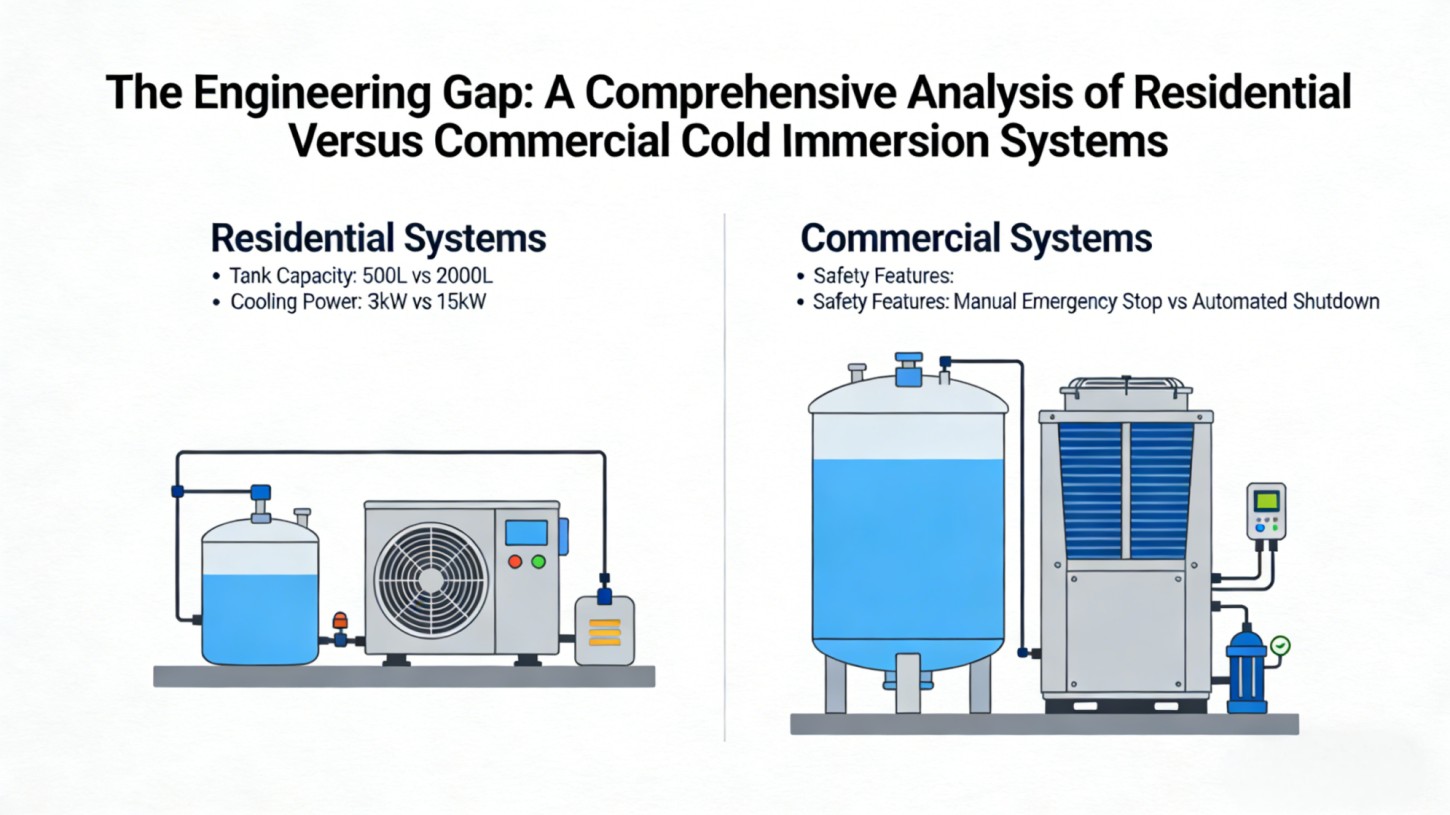
The single greatest point of failure for an emerging commercial ice bath distributor is a fundamental misunderstanding of the engineering chasm between residential cold plunges and true commercial systems. In an attempt to lower the barrier to entry, distributors frequently fall prey to the deployment of modified residential equipment into high-traffic commercial environments.This inevitably results in catastrophic equipment failure, reputational damage, and the erosion of profit margins through endless warranty claims.
Operational Capacity and Thermodynamic Recovery
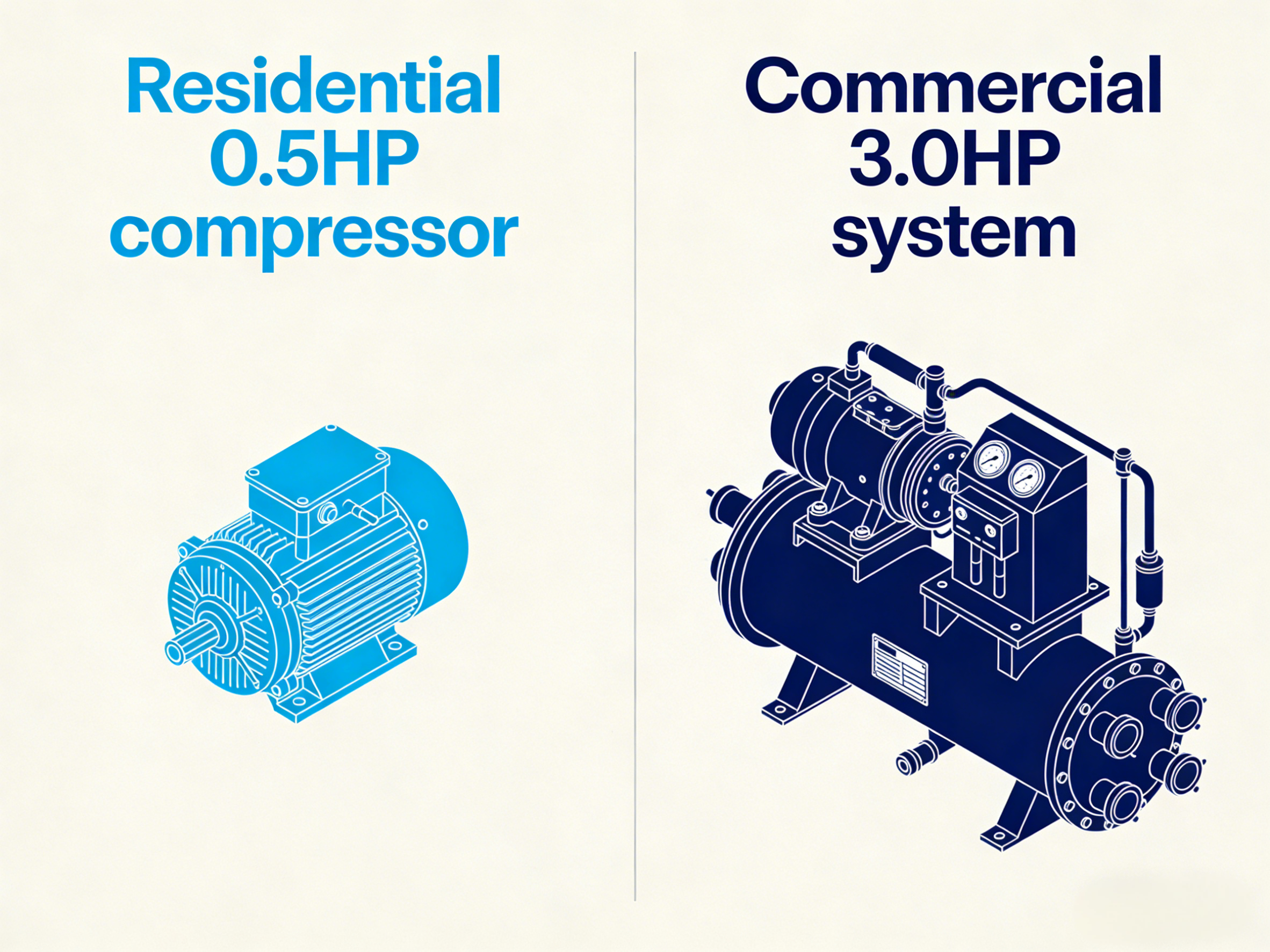
Residential ice baths are fundamentally engineered for intermittent, light use—typically fewer than 10 immersion cycles per day.Their thermodynamic recovery systems, usually powered by 0.3 HP to 1.0 HP compressors, are designed to chill 200 to 350 liters of water overnight or over a span of several hours.
Conversely, a genuine commercial environment, such as a high-performance athletic facility, a commercial gym, or a public wellness spa, generates relentless thermal loads. These facilities typically process 50 to 75 users daily, with extreme commercial applications reaching up to 400 daily users.To combat the constant introduction of human body heat and maintain precise temperatures, commercial systems require robust 2.0 HP to 3.0+ HP compressors paired with high-efficiency copper refrigeration lines lining the tub, allowing for continuous, rapid temperature recovery.
The "Automation Gap" and Water Chemistry
The necessity for commercial-grade engineering becomes most apparent in water management. The "automation gap" distinctly separates residential units from commercial tools.In a residential setting, manual water top-ups, basic paper filters, and manual chemical testing are acceptable inconveniences. In a commercial facility, manual maintenance is an operational liability that destroys profit margins through excess labor and exposes the business to severe health code violations.
True commercial systems demand sophisticated automation:
Automated Dosing Systems: Continuous, machine-regulated injection of chlorine or non-chlorine oxidizers to maintain compliance with stringent health codes, such as the UK's PWTAG or the US's NSF standards.
High-Volume Filtration: Transitioning from small surface area filters to massive 12-inch to 18-inch commercial filters.Furthermore, advanced commercial systems utilize non-self-priming universal top-fill pumps, eliminating the industry's primary failure source: airlocks and overheating associated with standard vacuum pumps.
Multi-Stage Disinfection: Relying solely on ozone or UV is insufficient for multi-user commercial environments. Approved commercial systems deploy a combination of high-flow filtration, dual ozone dispensers, and active chemical management to prevent outbreaks of dangerous waterborne pathogens like Legionella or Cryptosporidium.
Structural Integrity and Liability Prevention
Many low-cost suppliers utilize residential acrylics or inflatable drop-stitch materials, marketing them under a deceptive "commercial" guise. Under the rigors of heavy facility use, constant chemical exposure, and continuous physical impact, these materials degrade, warp, or collapse.Legitimate commercial tubs utilize marine-grade stainless steel or highly reinforced composites designed to withstand corrosive environments.
Furthermore, makeshift solutions, such as modified chest freezers, pose severe electrocution risks in commercial spaces due to improper grounding and inadequate moisture sealing around live electrical circuits.Using non-compliant, dangerous equipment exposes the end-user and the distributor to existential legal and financial liabilities, emphasizing the absolute necessity of distinguishing commercial infrastructure from home consumer goods.
Supply Chain and After-Sales Challenges
Operating an ice bath distribution business requires navigating a highly complex global supply chain fraught with logistical hurdles, regulatory shifts, and intensive after-sales maintenance obligations. The landscape in 2026 is defined by a shift from reactive problem-solving to proactive, AI-driven supply chain resilience and strict adherence to expanded safety standards.
The Evolution of Supply Chain Logistics
By 2026, the era of relying purely on buffer inventory to absorb supply shocks is obsolete. Logistics have entered the age of "Agentic AI" and "Self-Healing Chains".Rather than merely predicting disruptions—such as port closures, volatile freight rates, or component shortages—agentic AI systems act autonomously. These systems can reroute container shipments of chillers in real-time, adjust inventory levels, or autonomously renegotiate freight rates without human intervention.Distributors must partner with manufacturers whose logistics networks integrate product-level traceability and demand sensing technologies to prevent the devastating "bullwhip effect" of inventory overstocking or fatal stockouts, thereby ensuring a continuous flow of high-end wellness equipment.

Regulatory and Certification Landmines
The regulatory environment for hydrotherapy equipment tightened significantly heading into 2026. A pivotal shift occurred on January 13, 2026, with the full enforcement of the expanded scope of UL 1563 (Edition 7), the Standard for Electric Spas, Equipment Assemblies, and Associated Equipment.Historically focused solely on heated spas, this standard was officially expanded to strictly regulate electrically powered cold tubs and ice baths.
Distributors importing uncertified equipment face devastating consequences. The UL 1563 updates mandate rigorous testing for cooling functions, major heat pump components, grounding protocols, and specific marking/instruction requirements to address the physiological and electrical risks of cold water immersion.In tandem, compliance with NSF/ANSI 50-2025 (covering equipment and chemicals for recreational water facilities) is mandatory to ensure that the materials, filtration output, and chemical dispensers meet public health safety standards.Furthermore, the ADA (Americans with Disabilities Act) requires a 5% scoping requirement for accessible cold plunge tubs in commercial facilities and hotels, dictating specific clear floor space and control accessibility.Non-compliance with these interlocking standards not only results in stalled customs clearances but instantly disqualifies the equipment from being installed in commercially insured fitness centers.
The True Cost of After-Sales Service
The long-term viability of an ice bath distribution business is frequently won or lost in the warranty and repair department. Equipment downtime is toxic to B2B relationships. When a commercial client's system fails, they bleed revenue and suffer reputational damage.Distributors must mathematically account for common mechanical failure points:
Component / Failure Mode | Root Cause Analysis | Financial Impact on Distributor | Mitigation Strategy |
Compressor Mortality | Plate replacement blowouts, poor manufacturing, extreme ambient heat. | ~$300 per replacement + labor. Multiple failures erase total gross margin. | Source multi-year lifespan compressors; require strict Enthalpy lab testing. |
Control Circuit Shorts | Loose wiring, PCB board short-circuits due to high-humidity environments. | Moderate replacement cost; high operational downtime. | Demand IPX4 or SAA/IP55 outdoor-rated electrical enclosures. |
Sensor Failures | Calcium scaling on water level or temperature probes. | Low component cost; high diagnostic labor cost. | Implement automated chemical dosing to prevent hard water scaling. |
Filter Blockages | Neglected maintenance in high-traffic commercial settings. | Overheating systems, automated thermal shutdowns. | Mandate SLA contracts for bi-weekly commercial filter replacements. |
Distributors must internalize these realities and build localized networks of certified HVAC/R technicians to service their geographical territories. A distributor who has not negotiated a clear parts-replacement and labor-reimbursement Service Level Agreement with their overseas manufacturer will be forced to absorb the costs of all local repairs, quickly bleeding their operating capital dry.
What Distributors Should Look For in a Manufacturer
The selection of an OEM ice bath manufacturer or a primary commercial ice bath supplier is the most consequential strategic decision a distributor will make. The evaluation must transcend simple unit pricing and intensely scrutinize the manufacturer's technological sophistication, production infrastructure, and holistic B2B support capabilities.

Production Capacity and Engineering Prowess
Distributors must audit a manufacturer's production capacity to guarantee they can scale output in alignment with distributor sales forecasts without extending lead times or compromising quality assurance.Advanced engineering is non-negotiable in 2026. Leading manufacturers have completely phased out legacy refrigeration technologies in favor of eco-friendly, low Global Warming Potential (GWP) refrigerants like R32 and natural gas R290 (propane).These natural refrigerants are thermodynamically superior, offering faster cooling recovery times and drastically lower energy consumption, which is a critical selling point for ESG-conscious commercial buyers.
Furthermore, extreme environmental testing must be validated. Premier OEM manufacturers utilize advanced Enthalpy Difference Laboratories to conduct 100% full-function testing on every unit, including halogen leak detection and vacuum hold tests. This rigorous testing validates performance in extreme ambient conditions ranging from -40°C to +60°C, ensuring global adaptability regardless of the installation climate.
OEM/ODM Capabilities and White-Labeling
A tier-one commercial ice bath partnership empowers the distributor to build their own brand equity, rather than merely acting as a sales agent for an overseas brand. The manufacturer must possess robust OEM (Original Equipment Manufacturer) and ODM (Original Design Manufacturer) capabilities.This includes offering bespoke industrial designs, specific flow-rate modifications, and the integration of customized all-in-one chillers tailored to the distributor's unique target demographics.
Software white-labeling is equally critical. Premium suppliers now provide customizable mobile applications (such as the Halo ecosystem or custom iOS/Android apps) that bear the distributor's logo.These applications grant the end-user scheduling controls and tracked metrics, while simultaneously providing the distributor with back-end, cloud-based telemetry. This data architecture is essential for performing remote diagnostics, adjusting parameters, and deploying predictive maintenance algorithms, ultimately reducing physical service rollouts.
Marketing Development Funds (MDF) and Tiered Support
The most aggressive manufacturers actively subsidize their distribution networks to accelerate market penetration. Distributors should target suppliers offering A-level distribution rights, which grant exclusive territorial protection, aggressive volume discounts, and priority production queues.
Additionally, advanced manufacturers provide Marketing Development Funds (MDF).MDF structures represent direct financial or resource investments by the manufacturer into the distributor's localized marketing efforts. This support can manifest as joint digital marketing campaigns, co-funded exhibition booths at fitness trade shows, or access to comprehensive Digital Asset Management (DAM) libraries containing high-resolution product photography, 3D CAD renders, and pre-approved brand guidelines.This centralization ensures brand consistency across multiple channels while radically lowering the distributor's Customer Acquisition Cost (CAC), optimizing the 15204% Return on Equity potential seen in highly optimized B2B fitness equipment models.
Common Distribution Mistakes
The path to profitability in the B2B wellness equipment sector is littered with the remnants of distributors who fundamentally misunderstood the nuances of channel sales and operational scaling. Avoiding the following critical errors is essential for long-term survival.
1. The "Commercial Imposter" Deployment
As previously highlighted, the most prevalent and destructive mistake is selling residential-grade systems to commercial clients to undercut competitors on price.When a 1/3 HP compressor fails on day 14 under the strain of 40 gym members, or an inflatable tub collapses, the distributor faces irate facility owners, demands for full refunds, and catastrophic damage to their brand equity. Commercial operators value uptime and reliability above all else; deploying inadequate "commercial imposters" destroys the trust required for B2B success.
2. Myopic Pricing Strategies and Margin Erosion
Distributors frequently default to volume-driven, blanket discounting in the face of competitive pressure, especially from digital-native challengers in the commodity equipment segment.Price-driven promotions rapidly erode the perceived premium value of high-end recovery equipment and trigger a race to the bottom.Instead, distributors must utilize value-based pricing, defending their margins by articulating the specific ROI, member retention metrics, and scientific validation the equipment brings to the buyer.In B2B environments, an outright discount should be replaced with value-adds, such as bundled extended warranties, customized facility layouts, or included chemical starter packs, which preserve the core product's price integrity.
3. Fragmented Lead Generation and Omni-Channel Neglect
The B2B buyer journey in 2026 is highly complex, often involving multi-stakeholder buying groups. Relying strictly on one channel, or deploying generic, untargeted marketing materials, yields a distinctly low return on investment.The modern buyer is inundated with noise; generic outbound outreach is ignored nearly 70% of the time because it lacks relevance or context.
Distributors fail when they do not align marketing messaging with inside sales execution, failing to shift from volume-driven outreach to precision targeting.Furthermore, neglecting technical Search Engine Optimization (SEO) and educational content marketing for B2B queries ensures invisibility in a crowded market.Successful distributors build sophisticated sales funnels featuring localized case studies of successful gym deployments, detailed ROI calculators, and highly trained inside sales representatives who qualify intent rather than just interest.
4. Ignoring Inventory Forecasting and Supply Chain Management
Failing to implement predictive analytics for inventory forecasting leaves distributors vulnerable to crippling stockouts or margin-crushing excess inventory.Shelf-life limitations on sanitation chemicals, combined with volatile ocean freight schedules for heavy chiller units, require distributors to foster transparent communication with their supply chain partners. Failing to utilize demand sensing technologies to react swiftly to market changes prevents the distributor from scaling reliably.
Long-Term Partnership Strategy
To thrive in the latter half of the decade, the commercial ice bath distributor must abandon short-sighted, transactional supplier relationships in favor of deep, strategic, long-term partnerships. The industry has decisively moved beyond mere supply chain resilience into the era of "Total Value"—a strategic approach that unites total experience and total performance to maximize enterprise-wide value.
Strategic Alignment and Joint Innovation
A genuine commercial ice bath partnership aligns the strategic objectives of both the manufacturer and the distributor. This symbiosis creates a powerful feedback loop. The distributor feeds granular, on-the-ground market intelligence—such as shifting user preferences for specific tub depths, the demand for modular designs, or the necessity for quieter, EN 12102-1 validated acoustic operations for spa environments—directly to the manufacturer's R&D department.The manufacturer, in turn, rapidly iterates their OEM designs, providing the distributor with highly differentiated products that perfectly match local market demands, outpacing competitors reliant on static product catalogs.
Integrating Digital Transformation and Autonomous Support
The long-term partnership strategy must heavily index on digital service integration. By collaborating closely with an OEM ice bath manufacturer that utilizes advanced IoT, cloud computing, and AI, distributors can transition from merely selling hardware to providing comprehensive, intelligent ecosystem solutions.This includes utilizing predictive analytics derived from machine learning algorithms across thousands of deployed units to anticipate component degradation before it results in localized failure.Offering this level of enterprise-grade reliability, combined with Agentic AI systems that proactively manage procurement and freight routing, cements the distributor as an indispensable strategic partner to major hotel chains and global fitness franchises.
Sustainability as a Competitive Moat
Finally, ESG (Environmental, Social, and Governance) compliance is no longer a peripheral marketing tactic; it is a primary procurement mandate for institutional B2B buyers.Long-term supplier partnerships must be rooted in verifiable sustainability metrics. Distributors aligned with manufacturers that utilize recycled or renewable materials, champion high energy-efficiency ratings, deploy natural R290 refrigerants, and maintain robust product-level traceability will automatically bypass the strict procurement filters of major corporate clients.Conversely, distributors ignoring supply chain sustainability will find themselves locked out of the most lucrative enterprise-level contracts.
Building a highly profitable ice bath distribution business in 2026 demands a rigorous, analytical approach to supply chain economics and B2B positioning. By securing a tier-one partnership with an advanced OEM manufacturer—one that offers comprehensive digital diagnostics, MDF support, and sustainable engineering—the distributor secures a heavily defended competitive moat. Ultimately, realizing peak profitability relies on transitioning from standard transactional margins to recurring revenue ecosystems, utilizing value-based pricing, and executing precision omnichannel sales strategies to dominate the commercial wellness equipment market.